Impact

How we measure what matters.

Impact at Desert Rose Gives is not measured solely by the volume of services provided, but by the systemic shift in how our community is Seen, Heard, and Understood.

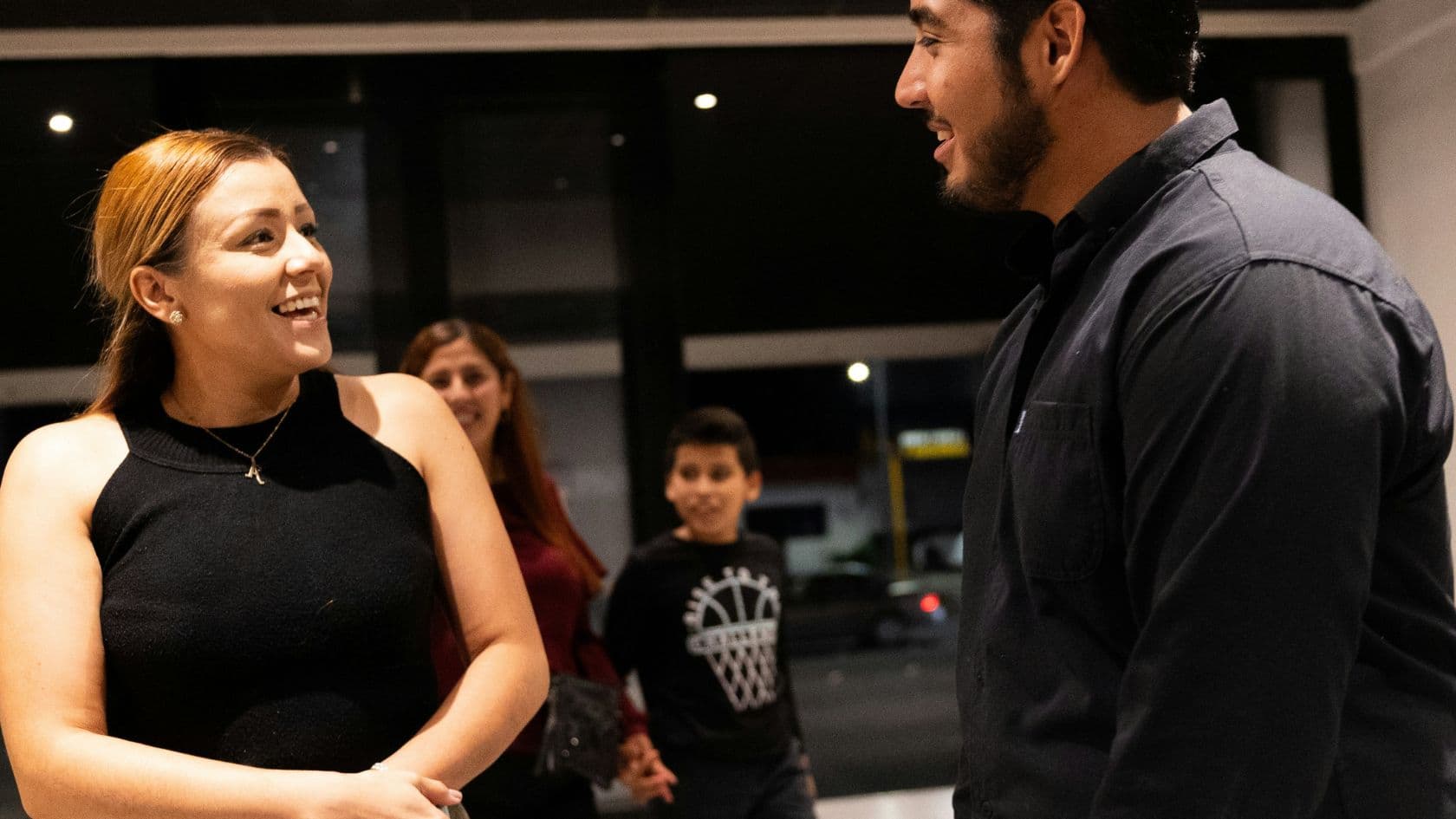
Southern Nevada community members gathered together in a candid, hopeful moment.

In a region where behavioral health access has historically ranked last in the nation, we move beyond the clinical “grant report” to build an architecture of resilience. Our work transforms lived experiences into rigorous data storytelling, bridging the gap between marginalized youth and the policy strategies required to protect them. Whether through our best-practice wellness models or our clinically informed AI companions, every outcome we track represents a dot connected between isolation and connection. We are not just documenting a crisis; we are engineering its end by equipping workforces and empowering the entire ecosystem.

The landscape we are working inside

Southern Nevada remains the epicenter of a critical health disparity that requires immediate, data-driven intervention.

Community context

Access to Care

Nevada consistently ranks 51st in the nation for access to behavioral health services, leaving thousands of youth without a clear pathway to support.

Source: Nevada Division of Public and Behavioral Health (DPBH).

Community context

Youth Mortality

Suicide remains one of the leading causes of death for Nevada youth, with specific disparities impacting BIPOC and LGBTQ+ populations.

Source: Centers for Disease Control and Prevention (CDC), WONDER database.

Community context

Existential Isolation

High-risk zip codes in Clark County show a direct correlation between extreme loneliness and the rising pipeline of problem gambling and substance misuse.

Source: Nevada Division of Public and Behavioral Health (DPBH).

The Reality: When systems are written in a language that neighbors don’t speak, the most vulnerable among us remain invisible to the resources designed to save them.

What our programs are doing inside that landscape

DR Gives outcome

WellXcel: Performance and Wellness Education

Since 2022, WellXcel has reached 11,598 participants across the United States and France through education, consultation, custom trainings, and community support.

  • 70% reported reduced stress
  • 40% reported decreased depressive symptoms
  • 100% reported new insights

Source: WellXcel Impact and Outcomes summary, Desert Rose Gives.

DR Gives outcome

Mind Over Media: Culturally Responsive Prevention

Launched in 2025 under the Nevada Child Death Review framework (NRS 432B.403 to 432B.4095), Mind Over Media engages 70 direct youth participants (ages 13 to 26) through focus groups and livestream workshops, with digital outreach across up to 10 social media platforms to reach thousands more. Deliverables include AI-supported digital toolkits, video shorts, and a Notion participant portal for qualitative data collection.

Source: Desert Rose Gives Child Death Review Grant Application, 2025.

DR Gives outcome

ECQO-Care Pilot Research Partnership

Desert Rose Gives serves as the named independent research partner for the ECQO-Care Pilot, contributing research design, cultural-responsiveness review, and community pilot oversight. Desert Rose Gives does not develop, operate, or own the ECQO Holdings platform. Desert Rose Gives donor funds support Desert Rose Gives research and community programs only.

A residential street in Southern Nevada at human scale.

Voices from the work

These stories are how we keep the numbers honest. The vignettes below are illustrative composites based on common participant experiences in Desert Rose Gives programs. Names and specific details have been generalized to protect privacy. The experiences, themes, and quotes reflect the consistent feedback we receive from real participants, organized into representative narratives. Desert Rose Gives will publish named testimonials with documented participant consent as they are sourced.

Breaking the Pattern (Marcus, 19)

Marcus, a former high school athlete in Las Vegas, participated in a WellXcel session focused on the intersection of sports culture and behavioral risks. After analyzing the data on how sports betting specifically targets marginalized zip codes, Marcus began noticing these predatory patterns within his own friend group’s Discord server. He didn’t just step back; he started leading the conversation, using the term Existential Isolation to explain why his peers were chasing a big win to fill a void of connection.

I thought it was just a game we were playing to stay connected, but I realized the game was designed to keep us lonely. WellXcel gave me the vocabulary to call it what it was: a pipeline. Now, when I see a friend chasing a loss, I don’t just ignore it. I name the pattern out loud.

The Architecture of the Feed (Elena, Parent)

Elena attended a Mind Over Media workshop after noticing her 14-year-old daughter’s sudden shift in mood following several hours on social media. Through the program’s focus on AI-driven content and digital safety, Elena learned how algorithms can manipulate a young person’s existential anxiety. The family conversations shifted from get off your phone to what is your phone trying to make you feel?

Before Desert Rose Gives, I was fighting the technology. Now, I understand the architecture of it. We don’t just talk about screen time anymore; we talk about how the feed is built to exploit her loneliness. It changed our entire home dynamic from one of policing to one of protection.

From Lived Experience to Leadership (Jordan, 24)

Jordan entered the Desert Rose Gives ecosystem as a participant with lived experience in the gambling recovery pipeline. Through the Desert Rose Gives community workforce development track, Jordan moved from navigating his own recovery to becoming a paid facilitator for others. As a lived-experience research contributor to the ECQO-Care Pilot, Jordan helped inform the cultural-responsiveness review that Desert Rose Gives delivers to ECQO Holdings as the pilot’s independent research partner.

For a long time, I felt like my past was just a series of failures in a grant report. Desert Rose Gives showed me that my experience is actually a vital dataset. I went from being a case number to being a research partner. I’m not just healing; I’m helping shape the research that will support the next person.

The Systemic Shift (Strategic Partner)

A representative from a regional health organization noted that their collaboration with Desert Rose Gives fundamentally changed how they approach youth outreach. By adopting our Seen, Heard, and Understood framework and utilizing our data storytelling, they were able to secure a major grant that had previously been out of reach due to outdated messaging.

Working with Bianca and her team forced us to look at our programming through a culturally responsive lens we didn’t realize we were missing. We weren’t just checking a box; we were rebuilding our entire outreach strategy. Desert Rose Gives provided the clinical frame that allowed us to finally speak the language of the community we serve.

Seeing Through the Screen (Maya, 17)

Maya, a participant in the Mind Over Media livestream workshops, described a specific moment while scrolling her feed late at night. She recognized a set of existential triggers that the program had highlighted just days before. Instead of falling into a cycle of comparison and isolation, she recognized the data storytelling being used against her and chose to engage with the GO MNTL peer-support channel instead.

It was like the curtain was pulled back. I saw a post that usually would have made me feel like I wasn’t enough, but I remembered the workshop. I realized the algorithm was looking for my loneliness. In that moment, I didn’t feel invisible anymore because I knew how to see what was happening to me. I chose to log off and reach out to my peers.
Two community members in conversation during a Desert Rose Gives gathering.

Sources and methodology

Landscape statistics on this page are drawn from public federal and Nevada state sources: the US Census Bureau (Clark County population), Mental Health America (State of Mental Health in America annual report), the HRSA Bureau of Health Workforce (Mental Health Professional Shortage Area designations), the Centers for Disease Control and Prevention WONDER database (youth mortality), and the Nevada Division of Public and Behavioral Health (access to care and Existential Isolation correlations).

Desert Rose Gives outcome figures are drawn from internal program evaluation, specifically the WellXcel Impact and Outcomes summary and the Desert Rose Gives Child Death Review Grant Application. Source files are available on request through the Contact page. Figures are updated as new program periods close.

The Desert Rose Gives 501(c)(3) Determination Letter is available on request at grants@desertrosegives.org.


Help us keep these numbers honest.

The landscape does not change unless communities, funders, and partners decide to change it together.